When the Facade Still Sparkles but the Math Is Broken
The photograph captures the contradiction almost too perfectly. The Saks Fifth Avenue flagship stands dressed for the holidays, its stone façade softened by strings of warm white lights that trace every architectural line with care. Oversized geometric lanterns hang above the sidewalk like futuristic ornaments, polished and immaculate, while the scripted “Saks” sign floats in elegant cursive over the entrance, glowing with confidence that feels almost stubborn. Behind the barricades, pedestrians move past in winter coats and hats, some pausing, some photographing the windows, others just flowing along Fifth Avenue as if this were still one of the unquestioned temples of retail. Inside the vitrines, mannequins are posed with theatrical precision, trees and displays arranged to suggest abundance, tradition, and continuity. Everything in the frame signals stability and prestige. And that, analytically, is the point: luxury retail has become exceptionally good at staging permanence even as the underlying business model erodes.
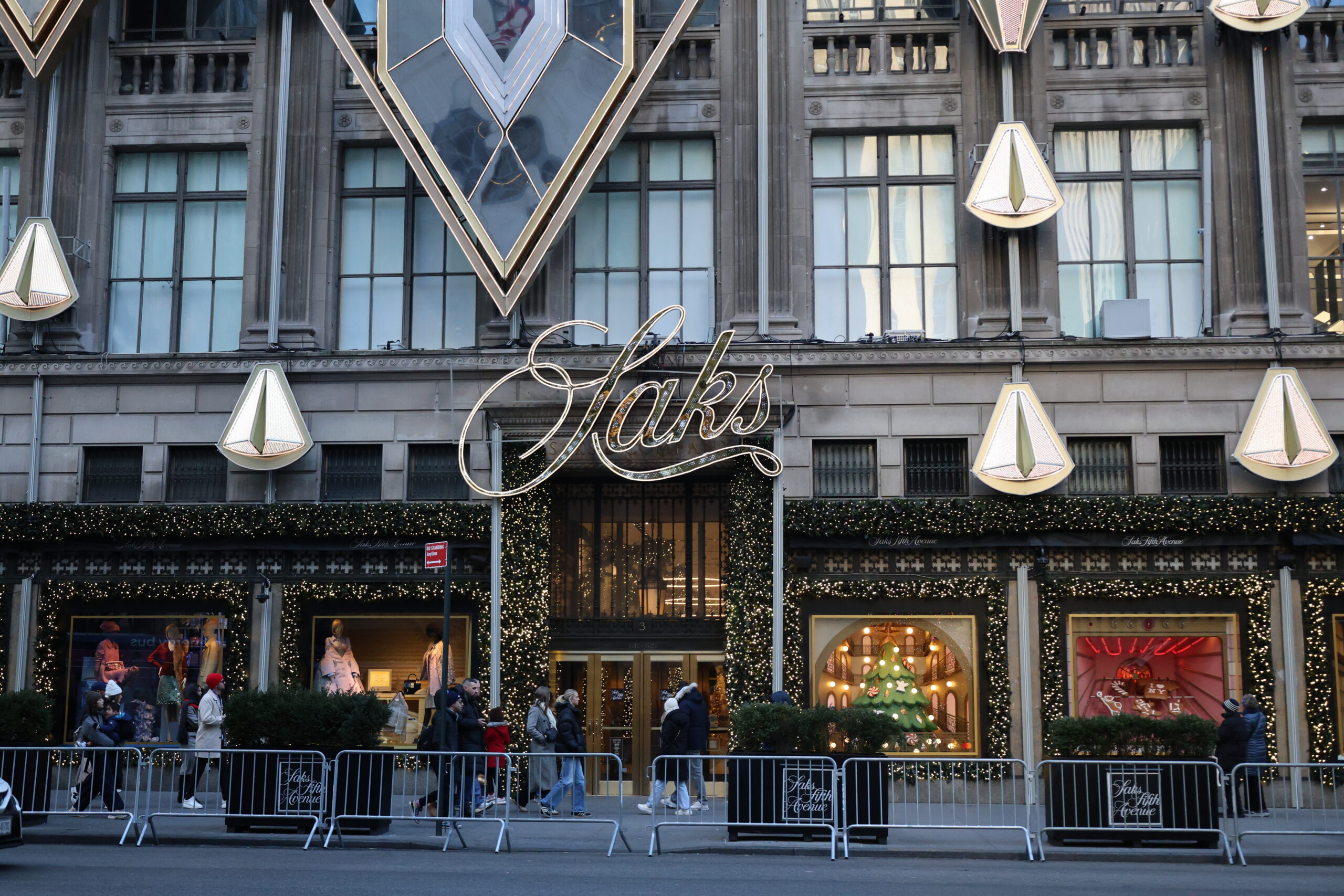
This visual calm masks the reality that the owner of Saks Fifth Avenue, Neiman Marcus, and Bergdorf Goodman collapsed under the weight of billions in debt. The bankruptcy filing isn’t a fashion story or a seasonal stumble; it’s a balance-sheet failure years in the making. These brands were treated less like operating companies and more like financial instruments, their heritage leveraged to fund acquisitions, restructurings, and refinancings that postponed reckoning rather than prevented it. Debt replaced reinvention. While the storefronts remained immaculate—because they had to, symbolically—the economics behind them grew increasingly fragile. High fixed costs, from prime real estate to labor-intensive service models, collided with a consumer base that didn’t abandon luxury spending but rerouted it elsewhere: directly to brands, to online platforms, to experiences that feel faster, more personal, more alive.
What the image doesn’t show, but quietly implies, is how hollow the aggregation model has become. Department stores once justified their scale by discovery, by curation, by the thrill of wandering through a dense ecosystem of brands. Today, many of those brands see the department store as optional or even dilutive, a wholesale channel that erodes margin and control. The shopper senses this, too. The polished windows promise magic, but inside the experience often feels thinner than it should—fewer staff, less expertise, less surprise. The photograph’s barricades, meant for crowd control or seasonal order, almost read as metaphorical: a barrier between spectacle and substance, between what the brand projects and what the business can sustain.
Bankruptcy, then, doesn’t negate the beauty of this scene; it explains it. The lights are on because turning them off would admit defeat in the only language luxury retail still speaks fluently. But prestige cannot service leverage forever. The lesson embedded in this image is not that luxury is dying, but that legacy intermediaries cannot survive as debt vehicles wrapped in nostalgia. If these institutions re-emerge at all, they will need to be smaller, less burdened, and far more honest about why anyone should cross those barricades and step inside. Otherwise, the façade will keep glowing—carefully lit, expertly staged—while the business behind it continues to fade, quietly, out of frame.
