People love dramatic headlines about rare earths. They sound exotic, mysterious, the stuff of state secrets and geopolitics. But while the world obsesses over lithium, gallium, neodymium and the race to secure the minerals powering the next industrial age, something far more ordinary sits in the background—quiet, banal, almost invisible in its ubiquity—yet capable of freezing global trade more efficiently than any embargo: the humble steel shipping container.
That dull-looking metal box—the same one stacked on freighters like toy blocks and parked behind ports, warehouses, and industrial lots—is one of the most strategically important inventions of the last century. It standardized modern logistics. It shrank distances. It rewired global manufacturing. And today, nearly 97% of the world’s shipping containers are manufactured in China, primarily by three companies. Nobody really talks about it, because it feels too mundane to matter. But in a world where trade disruptions, sanctions, and supply chain fragility are becoming a recurring theme rather than an exception, this quiet dependency may turn out to be one of the most underestimated chokepoints in the global economy.
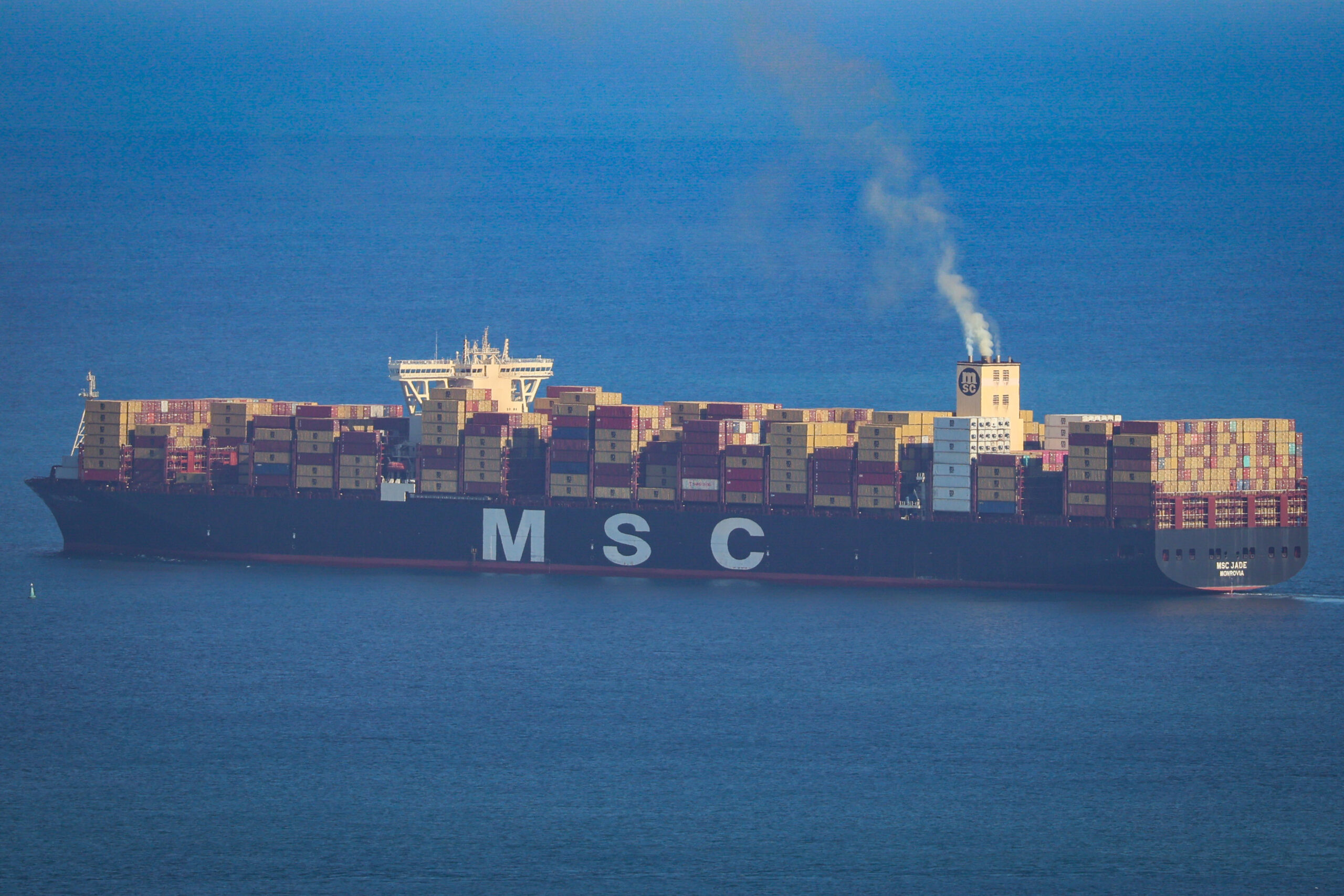
The scale of dependency is almost surreal. Europe produces essentially none. The U.S., once a symbolic player, ceded the field decades ago. Other Asian manufacturing hubs—from Vietnam to South Korea—never invested enough to be meaningful. And like many monopolies, it did not happen overnight; it happened gradually, as heavy industry consolidated and China became the lowest-cost center for steel fabrication, welding labor, coatings, and compliance with international standards. The world didn’t object. The math looked good. Shipping was cheap. Then, a few years ago, during the COVID-era surge in maritime freight demand, global logistics got an unexpected stress test.
People still remember the headlines about port backups, container ships waiting offshore, prices soaring. But what received less attention was why the bottleneck stretched into months: the world had run out of available containers. Not because they disappeared—though some did get trapped inland, buried in secondary ports, or stuck in the wrong hemisphere—but because there was essentially no alternative production base capable of ramping up supply. Demand spiked. Manufacturing windows in China were delayed by pandemic controls. Prices for a 40’ container skyrocketed from under $2,000 to nearly $10,000 at the peak. And suddenly those boring steel boxes were treated like finite strategic assets.
The episode passed, eventually. Port flows normalized, freight markets corrected, and container prices sank back to Earth. But the lesson was quietly profound: without those standardized metal boxes, nothing moves. It does not matter how many rare earth magnets are stockpiled, how advanced a semiconductor fab is, or how strategically placed a lithium mine becomes—if manufacturers cannot move product across oceans efficiently, global trade seizes like an engine without oil.
And here’s the uncomfortable part: this risk is not theoretical. If geopolitical tensions escalate, especially in a scenario involving trade restrictions or industrial policy retaliation, the ability to weaponize the container supply chain is real. It wouldn’t even require an embargo. Delaying safety certifications, reducing production quotas, or prioritizing domestic demand would be enough to disrupt shipping economics globally. The fragility is structural.
Some governments and maritime alliances have begun acknowledging the issue, but so far the policy response is lukewarm. Containers are not glamorous, not a headline-magnet like microchips or EV batteries. They lack the political theater of a mineral embargo. Yet their strategic significance is almost bigger: they underpin the entire architecture of globalization.
Real diversification—if it ever happens—would require state-backed incentives, long-term industrial commitments, and rebuilding expertise that the West deliberately hollowed out. There’s also the uncomfortable cost reality: a domestically manufactured container in Europe or the U.S. could cost 40–60% more than the Chinese-made equivalent. In an industry driven by razor-thin margins, price matters—and that makes the status quo stubbornly persistent.
But as the global economy shifts from efficiency to resilience, the tone may change. Just as automotive and semiconductor supply chains are now being regionalized or “friend-shored,” container manufacturing could eventually follow. The question is whether the shift will be proactive—or reactive after another global supply chain shock.
Markets tend not to price in low-frequency, high-impact dependencies until they break. During COVID’s logistical chaos, analysts briefly noticed. Then the memory faded. The risk did not. In a future defined by new economic blocs, strategic trade alignment, and supply chain sovereignty, shipping containers may become a surprisingly visible piece of global industrial policy.
Odd as it sounds, the world might soon learn that globalization doesn’t rely only on rare metals or AI chips—but on painted steel rectangles welded in factories most people will never think about.
Potential for a China-Alternative Container Manufacturing Industry
The question of whether the world can diversify shipping container production away from China isn’t just theoretical—it is increasingly entering strategic policy discussions, especially among trade ministries, port authorities, and industrial reshoring analysts. The potential is there. The incentives are emerging. But the economics and execution are far from simple.
A new container manufacturing ecosystem would need to exist at the intersection of industrial strategy and national security thinking, not pure market logic. Because by market logic alone, China already won: lower labor costs (historically), steel supply integration, mature fabrication clusters, environmental standards tuned to mass industrial output, and decades of incremental refinement created a moat that isn’t easily crossed. So diversification depends not on matching China’s cost basis, but on redefining the value proposition: resilience over price, reliability over single-source dependency, and sustainability aligned with carbon-neutral logistics policy that Europe, Japan, and even the U.S. are now pushing.
If any region has a shot, it’s those with existing steel industries, deep-water port infrastructure, and governments currently pursuing industrial security agendas. India is the most obvious contender—ambitious manufacturing incentives, a large labor base, and existing shipbreaking and metal fabrication industries. Vietnam and Malaysia could follow, especially if aligned with U.S. or Japanese investment frameworks such as the Indo-Pacific Economic Corridor. Eastern Europe could compete too, particularly Poland or Romania, where EU incentives could soften high manufacturing costs and align with carbon border policies. Even the United States could re-enter the field, but only through heavy government support, likely packaging this effort alongside naval modernization and supply chain resilience programs. The Gulf states, flush with capital and hungry for post-oil industrial prestige projects, could attempt it too—but container manufacturing requires more than investment; it requires scale, gritty manufacturing talent, and logistical integration.
The biggest obstacle isn’t machinery or factory space—it’s economics of scale. Container manufacturing only works efficiently when volume is measured in hundreds of thousands of units annually, not boutique tens of thousands. The brutal truth: if a factory does not produce at China’s scale, containers will cost more. Much more. And unless there is guaranteed demand through long-term procurement contracts—perhaps from state-owned shipping lines, alliances like Ocean Network Express, or defense logistics agencies—no private investor will risk capital.
Technology may eventually collapse some barriers. Automation, robotics welding, corrosion-resistant coatings applied by machines rather than labor-intensive layering, new composite materials replacing some steel components, digital twins optimizing manufacturing tolerances—these could shrink the labor advantage of China. Add to that the trend toward smart containers with embedded sensors for tracking, humidity control, tamper detection, and maintenance prediction, and suddenly container manufacturing becomes less a commodity business and more a hybrid of heavy industry and IoT manufacturing. Whoever leads that transition may not need to beat China on price; they only need to make containers smarter, cleaner, and guaranteed-available.
Government incentives would be the catalyst. Tax credits for manufacturing, export guarantees for buyers, subsidies tied to supply-chain resilience frameworks, or even carbon-linked tariffs could tilt the field. In the same way the U.S. CHIPS Act or EU Net-Zero Industry Act seeded non-Chinese semiconductor and clean tech ecosystems, a similar policy approach could make container manufacturing viable outside Asia.
The opportunity is real, albeit imperfect. If the world continues drifting toward geopolitical blocs, reshoring, energy transition supply chains, and trade securitization, shipping containers will stop being viewed as a low-margin commodity and start being treated as protected critical infrastructure. And when that mindset shift happens—and it already has in some capitals—the business case for non-Chinese production is no longer about margins. It becomes about sovereignty.
