• Skip to main content
  • Skip to secondary menu
  • Skip to footer

Market Analysis

Connecting the Dots, Quantifying Technology Trends & Measuring Disruption

  • Custom Market Report
  • Sponsored Post
  • Domain Marketplace
  • Technology News
  • About
  • Contact

Cars Are Computers Now, and Most Carmakers Aren’t

April 26, 2026

For a century, a car was its hardware. Engine displacement, chassis stiffness, transmission ratios — the metallurgy and mechanical engineering defined the product. Brands competed on the things you could touch. A BMW drove like a BMW because of suspension geometry and inline-six character, not because of code. A Toyota lasted because of build tolerances, not because of an over-the-air patch.
Cars Are Computers Now

That world is ending. The car is becoming a computer with wheels, and the shift is more violent than the industry will admit publicly.

Tesla showed what software-defined meant in practice. The same physical car got faster, gained driver-assistance features, and changed its user interface through pushes from a server. Acceleration was a software variable. Range was a software variable. The trunk-popping animation was a software variable. The hardware was largely frozen at production; the experience kept moving.

Chinese manufacturers learned the lesson faster than Europe or Japan. BYD, Nio, Xpeng, Li Auto, Zeekr — these companies organized themselves around software stacks first and metal second. Their cars iterate like phones. Infotainment is built like a consumer-grade OS, not like a navigation unit subcontracted to a Tier-1 supplier and last refreshed when the model year changes. Their margins on driver-assistance subscriptions and feature unlocks compound while German and Japanese OEMs still treat software as a cost center inside a hardware company.

The legacy automobile industry‘s structural problem is cultural. A century of organizing engineering around model-year cycles, supplier-managed subsystems, and stamped-steel platforms produces companies that cannot ship code. Volkswagen poured billions into CARIAD and produced delays and recalls. Stellantis has restructured its software organization repeatedly without convergence. GM shut Cruise after a series of failures in autonomous deployment that traced back to software immaturity, not sensor cost. The pattern is consistent: traditional automakers can build excellent vehicles and cannot run software organizations at the cadence the new product demands.

Power inside the value chain is moving accordingly. Tier-1 suppliers — Bosch, Continental, ZF, Denso, Aptiv — built their dominance around delivering complete subsystems: brakes, steering, infotainment, telematics. The software-defined architecture collapses these subsystems into a few central compute domains. The OEM increasingly wants to write the integration layer itself, or buy it from Nvidia, Qualcomm, or a hyperscaler. The Tier-1 either becomes a commodity hardware vendor or rebuilds itself as a software house, which most are struggling to do.

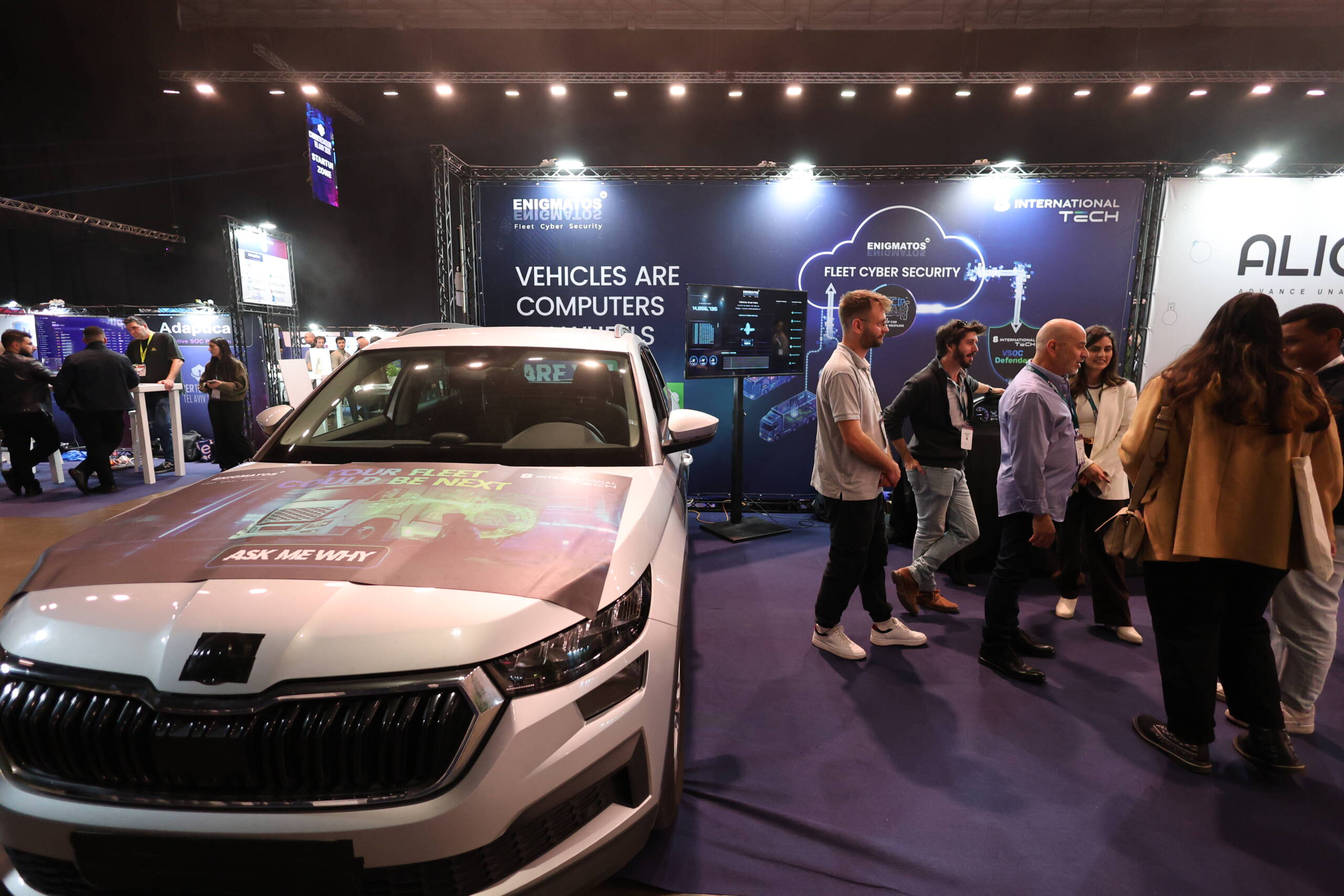
The attack surface expands with the codebase. A car running tens of millions of lines of code, connected continuously to manufacturer cloud infrastructure, with cellular modems, Bluetooth, Wi-Fi, USB, OBD-II, and increasingly V2X radios, is a network endpoint. The Enigmatos pitch at Cybertech this year — vehicles are computers on wheels — is not marketing flourish, it is the operational reality fleet operators now face. A compromised OTA pipeline can brick or weaponize an entire fleet. Insurance underwriters and defense logistics buyers have started pricing this in.

Regulation is lagging the engineering. Type approval frameworks were designed to certify fixed configurations of metal, glass, and rubber. A car whose behavior changes every six weeks through a remote push does not fit cleanly inside that framework. UNECE WP.29 cybersecurity and software update regulations are early attempts; they will not be the last. Liability law has not resolved who owns the failure when an autonomous-driving stack misbehaves — manufacturer, software vendor, sensor supplier, or operator. The ambiguity is itself a market force, slowing some deployments and accelerating others into permissive jurisdictions.

The economic logic at the end of this transition favors a smaller number of platform players. Building a competitive vehicle compute platform — silicon, OS, middleware, perception stack, cloud backend, security operations center — is closer in capital intensity to building a hyperscaler than to building a model-year refresh. Most national champions outside China and the United States cannot fund it alone. Expect consolidation, joint platforms, and licensing deals that would have been unthinkable in the hardware era.

The car of 2035 will still have four wheels, brakes, and a passenger cabin. It will be defined, sold, updated, monetized, attacked, defended, regulated, and depreciated as software. The companies that understand this are already building accordingly. The ones still defending the primacy of horsepower and panel gaps are managing a controlled decline.

Filed Under: Reports

Footer

Recent Posts

  • The $2.6 Trillion Signal: What Gartner’s AI Spending Forecast Actually Tells You
  • The Productivity Is Already Here. The Bubble Narrative Is Not.
  • The Collingridge Dilemma
  • Why Memory Prices Won’t Come Down
  • The Bill Comes Due
  • The Software-Defined Camera Won. The Open OS Did Not.
  • Cars Are Computers Now, and Most Carmakers Aren’t
  • Gartner: Global IT Spending to Hit $6.31 Trillion in 2026, Driven by AI Infrastructure
  • The SDK Generator Benchmarks: Infrastructure vs. Convenience
  • Infographic: We Are Likely in the Early Stages of Another Productivity Boom

RSS Market Research Media

  • China’s U.S. Treasury Holdings: The Great Repositioning (2021–2025)
  • Infographic: Why the 2025 CIPA Data Proves the APS-C Renaissance is Real
  • How WiFi Changed Media
  • Canva Acquires Simtheory and Ortto to Build End-to-End Work Platform
  • Netflix Price Hikes, The Economics of Dominance in a Saturated Streaming Market
  • America’s Brands Keep Winning Even as America Itself Slips
  • Kioxia’s Storage Gambit: Flash Steps Into the AI Memory Hierarchy
  • Mamdani Strangling New York
  • The Rise of Faceless Creators: Picsart Launches Persona and Storyline for AI Character-Driven Content
  • Apple TV Arrives on The Roku Channel, Expanding the Streaming Platform Wars

Media Partners

  • Analysis
  • Technology Conferences
  • OSINT
  • Defense Market
  • Cybersecurity Market
  • Event Calendar
  • Calendarial
  • Opinion
  • 3V
  • Media Presser
  • Exclusive Domains

Copyright © 2026 MarketAnalysis.com | Terms of Service | Privacy Policy | Supplier Disclaimer |

Media Partners: Technologies | Photography | Referently

We use cookies on our website to give you the most relevant experience by remembering your preferences and repeat visits. By clicking “Accept”, you consent to the use of ALL the cookies.
Do not sell my personal information.
Cookie SettingsAccept
Manage consent

Privacy Overview

This website uses cookies to improve your experience while you navigate through the website. Out of these, the cookies that are categorized as necessary are stored on your browser as they are essential for the working of basic functionalities of the website. We also use third-party cookies that help us analyze and understand how you use this website. These cookies will be stored in your browser only with your consent. You also have the option to opt-out of these cookies. But opting out of some of these cookies may affect your browsing experience.
Necessary
Always Enabled
Necessary cookies are absolutely essential for the website to function properly. These cookies ensure basic functionalities and security features of the website, anonymously.
CookieDurationDescription
cookielawinfo-checkbox-analytics11 monthsThis cookie is set by GDPR Cookie Consent plugin. The cookie is used to store the user consent for the cookies in the category "Analytics".
cookielawinfo-checkbox-functional11 monthsThe cookie is set by GDPR cookie consent to record the user consent for the cookies in the category "Functional".
cookielawinfo-checkbox-necessary11 monthsThis cookie is set by GDPR Cookie Consent plugin. The cookies is used to store the user consent for the cookies in the category "Necessary".
cookielawinfo-checkbox-others11 monthsThis cookie is set by GDPR Cookie Consent plugin. The cookie is used to store the user consent for the cookies in the category "Other.
cookielawinfo-checkbox-performance11 monthsThis cookie is set by GDPR Cookie Consent plugin. The cookie is used to store the user consent for the cookies in the category "Performance".
viewed_cookie_policy11 monthsThe cookie is set by the GDPR Cookie Consent plugin and is used to store whether or not user has consented to the use of cookies. It does not store any personal data.
Functional
Functional cookies help to perform certain functionalities like sharing the content of the website on social media platforms, collect feedbacks, and other third-party features.
Performance
Performance cookies are used to understand and analyze the key performance indexes of the website which helps in delivering a better user experience for the visitors.
Analytics
Analytical cookies are used to understand how visitors interact with the website. These cookies help provide information on metrics the number of visitors, bounce rate, traffic source, etc.
Advertisement
Advertisement cookies are used to provide visitors with relevant ads and marketing campaigns. These cookies track visitors across websites and collect information to provide customized ads.
Others
Other uncategorized cookies are those that are being analyzed and have not been classified into a category as yet.
SAVE & ACCEPT