Most people looking at Rockefeller Center see a landmark. The more useful way to read it is as collateral. Since 1985 the complex has been financed, defaulted on, seized, resold and refinanced through a sequence of increasingly large debt structures, and in almost every cycle the equity holder has been the one who got hurt while the paper written against the building did what it was supposed to do. The 2024 refinancing is the fourth act in that story, and it says more about the bifurcation of the office market than any leasing statistic does.
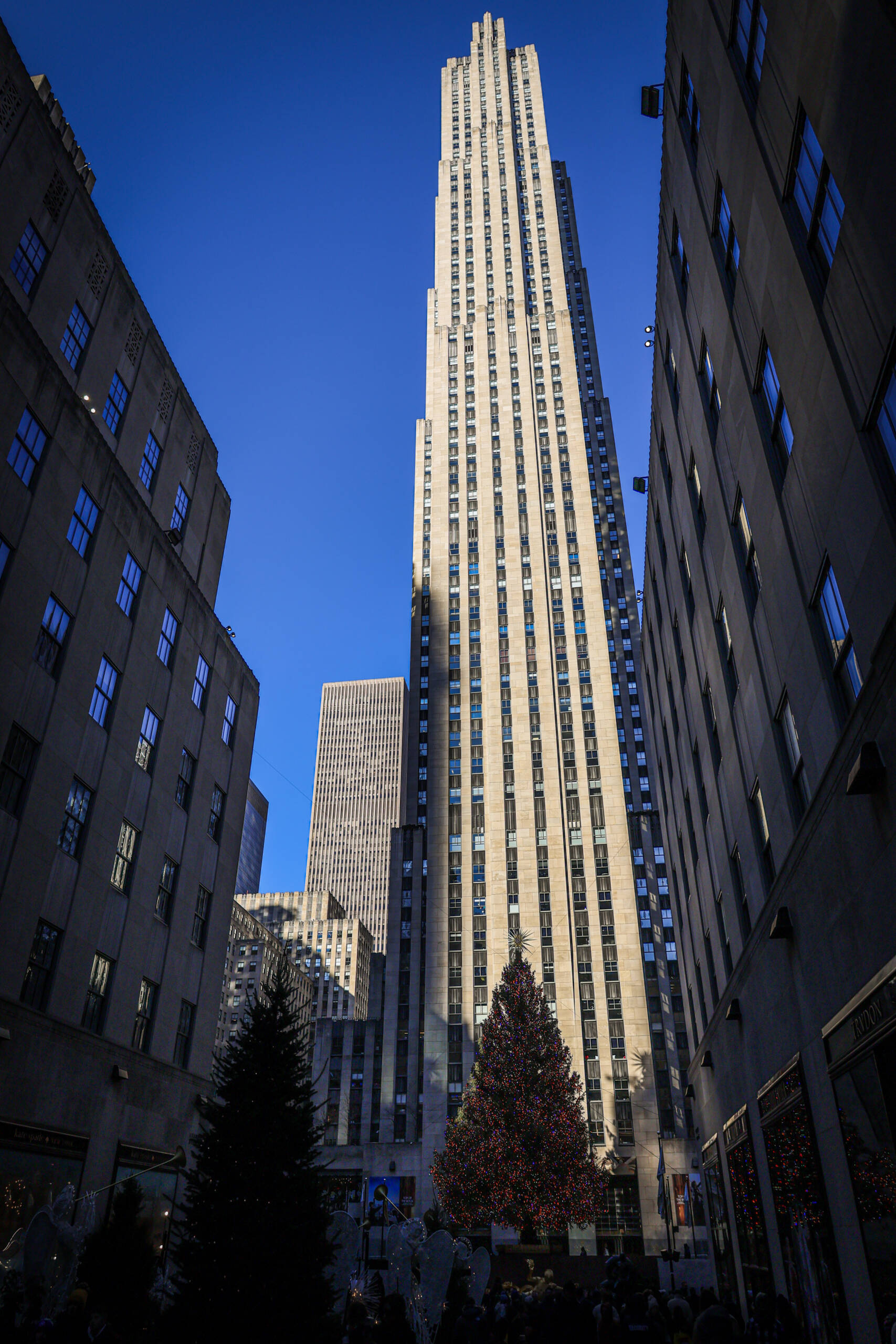
1985: The Family Sells the Cash Flow and Keeps the Building
Rockefeller Center Properties Inc. was created in 1985 as a REIT with a single purpose: to lend against the landmark buildings. It raised roughly $1.3 billion through common stock and convertible debentures, lent the proceeds to the Rockefeller entities on secured terms, and held a right to convert the mortgage into a 71.5 percent equity stake in 2000. Most of the money went out to the family trusts.
Read that structure carefully. The family extracted the value of the asset without selling it, and transferred the downside to public shareholders who now owned a mortgage on a Depression-era office campus dressed up as a growth security. That was the original trade, and every subsequent owner inherited its logic.
1989 and 1995: Buying the Equity, Inheriting the Debt
Mitsubishi Estate bought what became 80 percent of Rockefeller Group for approximately $1.4 billion, paid to the Rockefeller trusts. What it acquired was an equity position sitting behind an existing $1.3 billion mortgage, in a building where rents were running in the low thirties per square foot and the underwriting assumed they would eventually approach triple digits. New York rents went the other way. By early 1995 Mitsubishi had funded hundreds of millions in cash shortfalls, and in May the two partnerships that owned the complex filed for Chapter 11.
The lesson was not that Japanese buyers overpaid for American trophies, although that is how it was reported at the time. The lesson was structural. A landmark generates prestige and tourist footfall, neither of which services debt. Rockefeller Center defaulted because it was a leveraged office building with an expensive maintenance profile, and the equity was thin enough that a normal cyclical downturn wiped it out.
The recovery went to the creditor. The REIT took the property, and in 1996 a group assembled around Goldman’s Whitehall fund, David Rockefeller, Tishman Speyer and the Crown family bought it for the equivalent of roughly $900 million. In December 2000, Tishman Speyer and the Crowns bought out their partners at a $1.85 billion valuation. That is a doubling in four years on an asset the previous owner had walked away from.
2024: The Trophy Tier Still Has a Bond Market
In October 2024, Tishman Speyer and Henry Crown & Co. refinanced the campus with a $3.5 billion single-asset single-borrower CMBS loan, co-led by Bank of America and Wells Fargo. Five-year term, fixed at 6.2265 percent, interest only. It was the largest CMBS issuance ever written against a single office asset, and the largest transaction of its type in years.
The proceeds retired about $3 billion of existing debt, including a twenty-year $1.7 billion CMBS loan and mezzanine financing that would have matured in May 2025. Roughly $247 million went into reserves for contractual leasing costs, and close to $180 million came back to the sponsors as cash.
Three things are worth extracting from that.
First, the sponsors took money off the table at the top of the rate cycle rather than at the bottom. A 6.23 percent fixed coupon on $3.5 billion is expensive money by the standards of the previous decade, and they took it anyway, in size, five years early relative to the sort of maturity brinkmanship that has defined the rest of the sector. Certainty was worth paying for.
Second, the collateral is not really an office building. The campus was about 93 percent leased to more than 400 tenants across 7.3 million square feet, but the cash flow also includes street and lower-level retail, Radio City, the observation deck and the rink. That diversification is what allowed the deal to clear a bond market that was refusing to price ordinary Midtown office paper at any spread.
Third, and most important for anyone drawing conclusions about the asset class: this transaction is evidence of bifurcation, not recovery. A campus with a redevelopment program near completion, a Deloitte and Lazard and JP Morgan tenant roster, and an attraction business that runs independently of the lease-up cycle is not a proxy for the office market. It is the exception that the market was willing to fund precisely because the rest of the category was not fundable.
What to Watch
The loan matures in 2029. The refinancing question that arrives then is the same one that arrived in 1995 and 2024, asked against whatever rate environment exists. Interest-only structures push the entire principal problem to the maturity date, which is manageable when the sponsor is well capitalized and the asset performs, and fatal when either condition changes.
Two things determine the answer. Whether Midtown trophy office rents hold their premium over the rest of the market, and whether the non-office revenue keeps growing. The second is easier to forecast than the first.
Which is the quiet irony of the whole structure. The crowd standing in the plaza every December photographing a spruce is not incidental to the credit. It is part of it.
