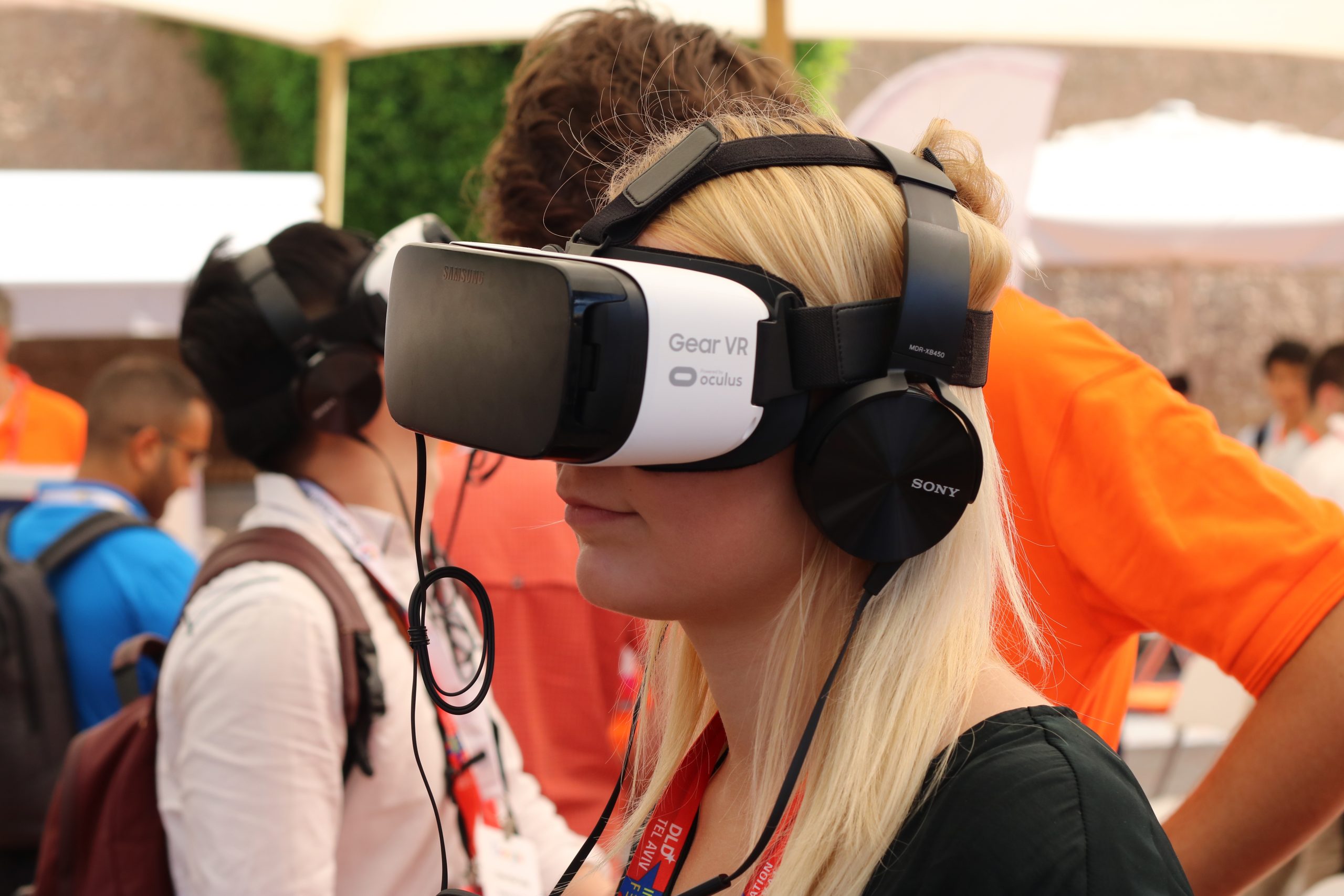
Nine years ago the fastest way to draw a crowd at a tech conference was a folding table, a box of phone-slot headsets and a pile of over-ear cans. People queued for it. Samsung’s Gear VR, with Oculus software inside and a Galaxy handset dropped into the front, was the cheap on-ramp everybody used to explain what the next platform would feel like.
That product line is gone, and so is the queue. What is interesting in 2026 is not that virtual reality failed. It is that the money, the engineering attention and the growth all migrated about six inches down the face, into something shaped like ordinary glasses.
The shipment numbers are ugly and consistent
Global VR headset shipments fell 17% year over year in the first quarter of 2026, and 39% against the previous quarter, with analysts pointing at the obvious cause: nothing new came out. Omdia expects VR display shipments to slide another 4% across the full year, to roughly 10.5 million units, after back-to-back declines in 2025 and 2026. Its read on the recovery is that there probably isn’t a sharp one. Any rebound looks gradual.
Set that against the eyewear side. AR display shipments are forecast to grow 154% this year to about 4.1 million units, with revenue up roughly the same. Display-less smart glasses, the kind with a camera, speakers and a voice assistant but no screen at all, are carrying most of the category’s growth. In the second half of 2025, Counterpoint found AI features in 88% of all smart glasses shipped.
Meta’s own accounts say it plainly
The cleanest evidence isn’t from a research house, it’s from Meta’s ledger. In 2021, Quest hardware generated roughly $1.85bn while smart glasses brought in something like $45m. By 2025 those two lines had swapped places: Quest at about $660m, glasses at $2.15bn.
Reality Labs is now carrying somewhere around $92bn in cumulative operating losses through mid-2026, with $4.62bn of that booked in the second quarter alone. Revenue in that quarter grew 16%, and Meta credited AI glasses, naming lower Quest sales as the drag pulling the other way. On the call, CFO Susan Li said VR investment specifically would decrease significantly as spending shifts toward wearables. Companies rarely put it that bluntly.
The hardware on the table right now
- Meta Quest 3 ($599) and Quest 3S ($349). Still the default recommendation, still the mature product, and getting older. Quest 4 has slipped to 2027.
- Apple Vision Pro ($3,699). Refreshed with an M5 chip, same micro-OLED panels, same price. It sold well short of expectations and remains a spatial computer rather than a games machine.
- Samsung Galaxy XR ($1,799). The first real Android XR flagship, Gemini baked in, and no meaningful traction yet.
- Valve Steam Frame. The one genuinely interesting bet left. Snapdragon 8 Gen 3, 16GB of RAM, eye tracking, foveated streaming, and a SteamOS library that includes flat games as well as VR titles. Valve confirmed summer 2026, summer ends on 22 September, and there is still no price and no date. A global memory shortage did most of the damage to that schedule.
Notice what that list doesn’t contain. There is no cheap, high-volume, mass-market device arriving to reset the category. The bottom of the market, which is where Gear VR lived, has been empty for years.
What actually survived
Three things keep the floor from dropping out. Enterprise training is the durable one, because the return on it is measurable and nobody needs the headset to be fashionable. Sony’s PlayStation VR has an install base advantage no standalone maker can buy, since a PS5 is already in the living room. And PC VR keeps a small, committed audience alive, which is exactly the audience Valve is building for.
What died was the assumption underneath that 2017 demo tent: that everybody would eventually own one of these, and that the phone was a stepping stone to it. The industry has now decided the winning form factor is something a person would wear outside, in public, on an ordinary Tuesday. A brick strapped to the forehead cannot get there, no matter how good the panels get.
So the category didn’t collapse. It got demoted from platform to peripheral, and the platform ambitions moved into the frames.
