Consumer prices rose 0.4% in October, above the 0.3% consensus, after a 0.6% jump in September. Core CPI rose 0.3% for the third month running, also hotter than expected. Energy added only 0.7% on the month after a 5.2% surge in September. This was the last CPI report before the Fed’s December 8-9 meeting, and it firmed up expectations of a December rate hike. The November report comes on December 10, a day after the meeting ends.
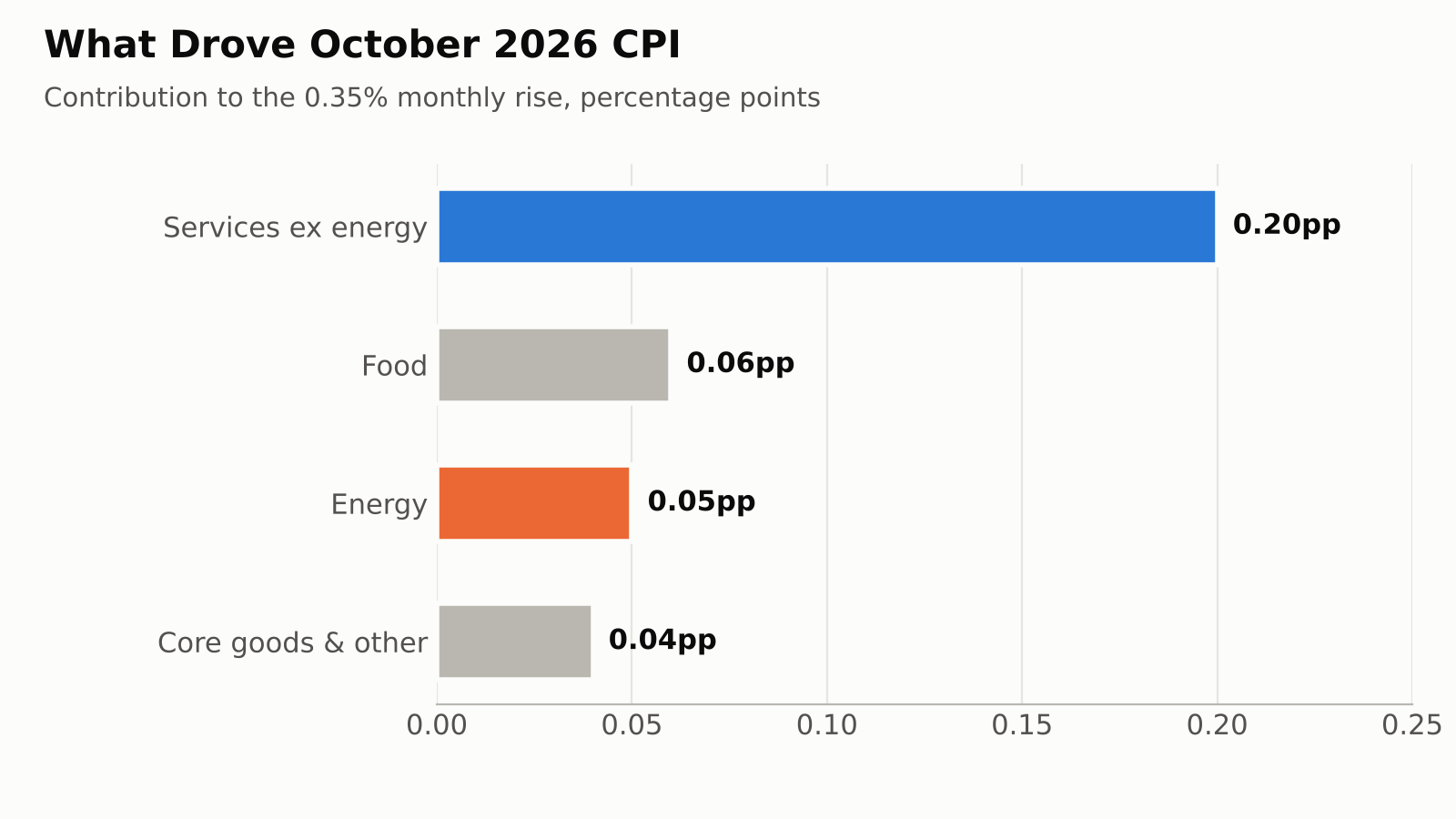
The composition matters more than the headline. On the unrounded 0.35% rise, services excluding energy contributed about 0.20 percentage points, food 0.06, energy 0.05 and core goods and everything else about 0.04. Shelter alone rose 0.3% and accounted for more than 30% of the monthly increase. The inflation problem has moved from the pump into wages, rents and services, which are stickier and harder for monetary policy to reach.
Oil itself has turned. Brent has fallen about a third since mid-October on hopes the Iran war is ending and now trades at its lowest since August. The national average gasoline price, which went from $2.87 a gallon in early February to $4.15 in the first week of November, has slipped back under $4. Annual CPI inflation hit 3.8% in April, the highest since May 2023, when energy prices were up almost 18% year on year. That spike is now rolling out of the comparison.
The catch is that diesel, freight and fertilizer costs have not followed crude down. Those are the inputs that run through logistics, agriculture and manufacturing, and they reach consumer prices with a lag. Several forecasters now push full relief into 2027. Core PCE was 3.1% in September. For a business owner, the next twelve months still look like elevated operating costs and expensive money at the same time.
That combination is where operational AI earns its keep. Route optimization for trucking fleets cuts diesel burn per delivery. Predictive maintenance keeps machinery running without emergency parts orders. Demand forecasting reduces inventory, which matters more when carrying it costs 5% a year. Energy management software in factories and data centers shifts load to cheaper hours. None of it is glamorous, and all of it shows up in measurable reductions in waste, downtime or working capital.
Services inflation points the same way. When the biggest contributor to CPI is the cost of labor-intensive services, the businesses that can deliver the same service with fewer hours gain margin on competitors. Customer support, claims processing, scheduling, document review and back-office finance are early places where AI tools already change unit costs. Rising wages make the payback faster.
Investors should demand evidence. The useful markers are reductions in waste, better asset utilization, shorter production cycles and lower cost per transaction, reported by customers rather than vendors. Industrial software, power management and supply-chain analytics deserve as much attention as the chatbot market, and their customers tend to be less sensitive to the hype cycle.
Periods of cost pressure have historically sped up the adoption of tools with proven returns. This one combines a services-led inflation problem, sticky transport costs and a 10-year Treasury above 5%. The companies that come out ahead are likely to be those that use AI on unglamorous operating problems now, while competitors wait for oil to do the work. Related: what Home Depot’s quarter says about the consumer.
